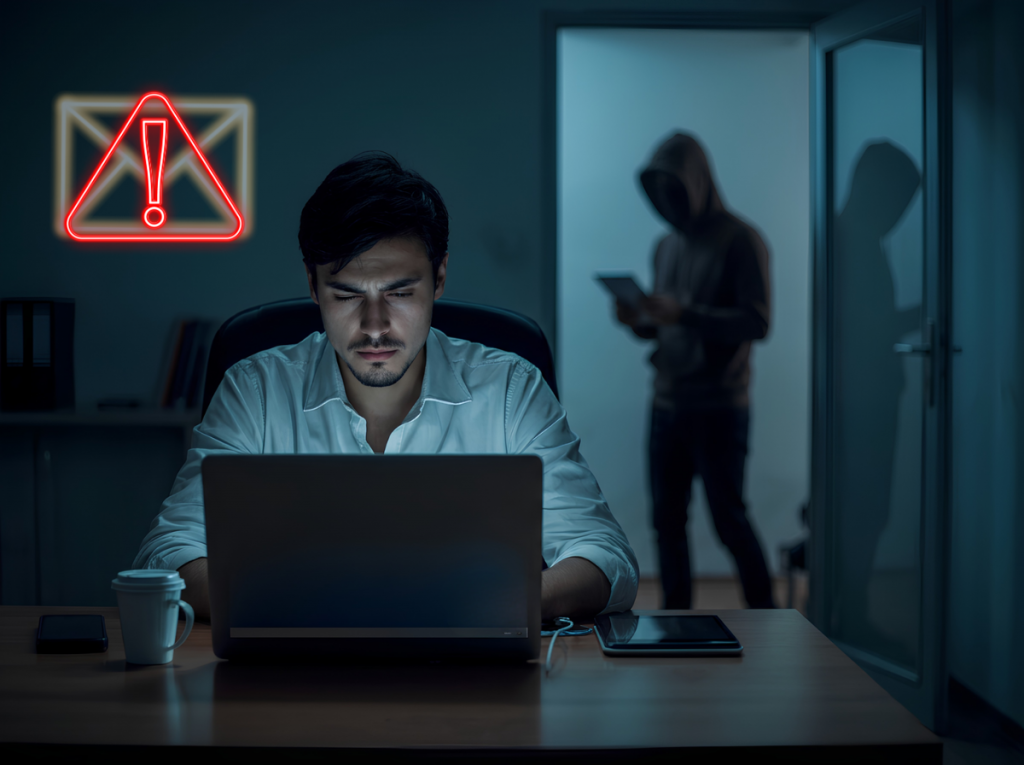
Cybersecurity threats often start quietly, from a phishing email, stolen password, or unnoticed access point before becoming a serious business problem.
For a long time, many small business owners assumed cybersecurity was someone else’s problem. Banks had to worry about it. Hospitals. Big retailers with massive customer databases and IT departments full of specialists. But for a business with 10, 20, or 50 employees? There always seemed to be bigger, more immediate things to focus on.
That assumption has become one of the most expensive mistakes a small business can make.
Small business cybersecurity is no longer optional because small businesses are targets — and in many cases, easier targets than the large companies they assume hackers are after. Not because small business owners are careless or indifferent, but because they are busy. They are serving customers, managing employees, handling payroll, keeping projects moving, and chasing growth. Cybersecurity becomes another item on an already long list, and it often stays there until something forces it to the top.
What Cybersecurity Problems Actually Look Like for Small Businesses
A cybersecurity problem rarely starts like a dramatic breach from a movie. Most cyberattacks on small businesses begin with something ordinary. A weak password. An employee clicking a convincing phishing email. A laptop left somewhere it should not have been. A vendor account nobody thought to lock down. A backup that had not been tested in months. Small cracks that nobody noticed until they became a serious business problem.
When that happens, everything else stops. It does not matter what was on your calendar that week, what deals were in progress, or how busy the season was. A compromised system, ransomware attack, or stolen login becomes the only thing that matters — and it can stay that way for days, weeks, or longer. Some businesses never fully recover.
The point is not to scare you. The point is that the gap between “we have not had a problem yet” and “we have a serious problem right now” is much smaller than most owners realize. And it usually closes without warning.
Assumptions Are Not a Cybersecurity Plan
Many small businesses are already paying for managed IT services and still assuming cybersecurity is covered, even when it was never clearly part of the conversation. They assume the antivirus software is handling it. They assume their employees would not fall for a phishing email. They assume their data backups are running properly. They assume their systems are being monitored, patched, and protected.
Those assumptions may all be true. But without actually verifying them, you do not have a cybersecurity plan. You have hope. And hope does not hold up well when someone tests it.
A real cybersecurity plan means knowing what needs to be protected, where your actual risks are, and who is responsible for each piece of it. Your systems are patched and up to date. Your data is backed up — and those backups are tested. Your employees know how to spot suspicious emails and avoid common cyber threats. Your passwords are managed properly. Your network is monitored. And if something does go wrong, there is a response plan in place before the crisis starts, not during it.
Cybersecurity should not be treated as a separate service you bolt on after something goes wrong. It should be a core part of what managed IT services do for your business every single day. That does not mean you need to become a cybersecurity expert or buy every tool someone tries to sell you. It means treating IT security the same way you treat business insurance, accounting controls, or the lock on your front door — something you may not think about every day, but something that is working in the background because someone made sure it was set up correctly.
The Cost of Waiting to Improve Cybersecurity
Prevention is almost always less expensive than recovery. A cyberattack can cost your business money, time, client trust, productivity, and momentum. Depending on the severity, it can stop your operations entirely. That is not just an IT problem. It is a business continuity problem, and it hits every part of the organization at once.
The good news is that small business cybersecurity does not have to feel overwhelming. You do not have to figure it out alone, and you do not have to navigate a pile of confusing technical jargon to make real progress. The right IT partner will help you understand what you are actually up against, close the obvious gaps first, and build a practical cybersecurity plan that fits how your business operates.
Cybersecurity should feel manageable, not mysterious. You should know what is being protected, what your biggest risks are, how your backups are being handled, whether your employees are prepared, and that someone is paying attention on your behalf.
Small businesses do not need fear-based cybersecurity. They need practical security that protects the business without making everything harder. They need systems that help employees work safely, reduce the risk of ransomware and phishing attacks, and give owners the confidence that one mistake — one clicked email, one stolen password, one missed update — will not turn into a disaster.
That is what good small business cybersecurity actually looks like. And at this point, it is as much a part of keeping your doors open as the lock on the front one.
Find out if your cybersecurity is really covered. Schedule a quick consultation — no jargon, no pressure, just a straight answer.
Frequently Asked Questions
Do small businesses really get targeted by hackers?
Yes, and more often than many owners expect. Small businesses are attractive targets because they often have fewer cybersecurity protections in place than larger companies. Cybercriminals know this and look for easy openings like weak passwords, phishing emails, outdated systems, and unsecured accounts.
We already have antivirus software. Is that enough?
Antivirus software is an important layer of protection, but it is not a complete cybersecurity plan. A stronger approach also includes network monitoring, secure data backups, employee cybersecurity training, password management, software updates, and a clear response plan for when something goes wrong.
How do I know if my current IT provider is handling cybersecurity?
Ask your IT provider directly what is included in your service. They should be able to explain what is being monitored, how often your backups are tested, how security updates are handled, and what the plan is if your business is hit by ransomware or another cyberattack. If the answer is vague, that is a gap worth addressing.
What is the first step if we have never had a formal cybersecurity plan?
Start with a basic cybersecurity assessment. The goal is to understand what you already have in place, what is missing, and where your biggest risks are. You do not need to fix everything at once. You need a clear picture of where you stand and a practical plan to close the most important gaps first.
How much does cybersecurity cost for a small business?
The cost depends on the size of your business, the systems you use, and what protections are already in place. The better question is how cybersecurity compares to the cost of a breach. For many small businesses, a cyberattack can lead to downtime, lost productivity, recovery costs, lost client trust, and expenses that quickly reach tens of thousands of dollars.
Need help with cybersecurity for your business? Schedule your consultation now.