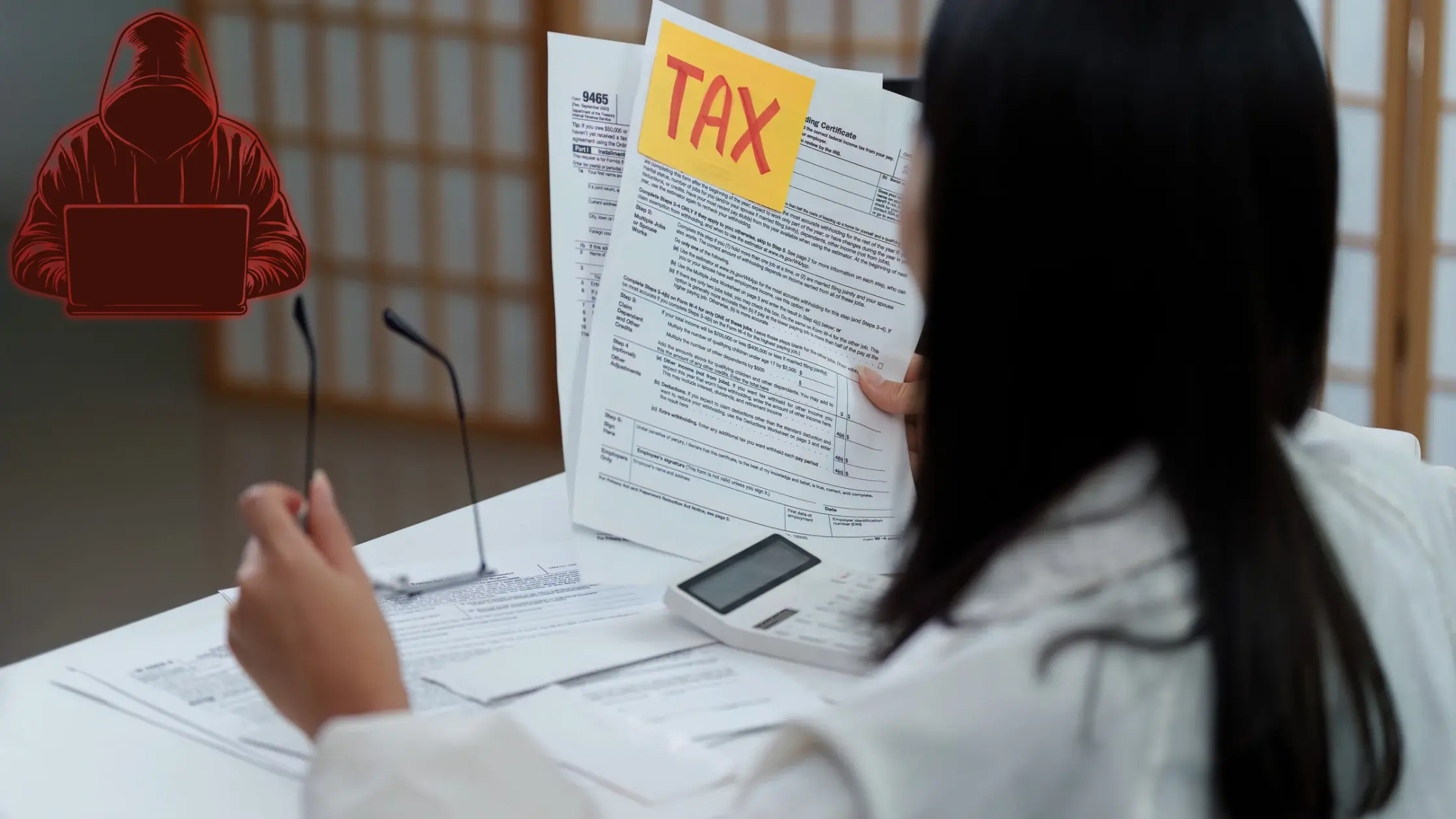
Tax documents hold nearly everything a scammer needs. Handle them with care.
Why tax season puts your business at risk
Most of us spend the year guarding our information one login at a time. Banking has a password. Payroll has two-factor authentication. Email has its own security questions. Then tax season arrives, and all of that carefully protected information gets gathered in one place and sent off to an accountant.
That moment came up in a recent episode of Stimulus Tech Talk, where Stimulus Technologies CEO Nathan Whittacre sat down with Marshall Davis, Director of Operations at Business Tax Solutions. BTS is a paperless, full-service tax firm that prepares thousands of returns for businesses across the country, so Marshall sees this risk up close every year.
Your entire existence in a few documents
When Nathan asked how he gets clients to take cybersecurity seriously, Marshall didn't sugarcoat it. A little healthy fear is a good motivator, he said, as long as it comes from understanding what's at stake.
"When you talk about taxes, that's everything," Marshall said. "That is your entire existence in a few documents."
Think about what a business tax packet holds: Social Security numbers, bank account details, revenue figures, payroll records, and personal information for owners and sometimes employees. For a scammer, that isn't one stolen password. It's everything they need to open accounts, file fraudulent returns, or drain funds.
As Marshall put it, how you handle those documents can matter more than everything you did all year to earn the numbers inside them.
The scams don't look like scams anymore
Remember the email from a rich uncle overseas who needed your bank details to send you a fortune? Marshall joked that the uncle has upgraded. Today's phishing emails look like they came from Microsoft, your bank, or a store you shop at, and they're often built around details pulled from your online footprint so they feel personal.
That's what makes them work. You're moving quickly through your inbox, you see a message from a company you've been meaning to contact, and you click without thinking. Marshall shared the story of an older client who lost six figures in less than 20 minutes after one of these messages. Fraud, he pointed out, is big business.
Three habits that stop most phishing attempts
Marshall's own email rules are simple enough for anyone on your team to follow:
- Check the sender's address, not the display name. If an email says it's from Target, the address should end in target.com, not a random string of letters.
- Don't click links in emails you didn't ask for. If a message asks you to log in or update something, go to the company's website directly and sign in there.
- If you can't verify it, delete it. If the request doesn't show up when you check the real website, it wasn't real.
None of these require special software. They require slowing down for five seconds before you click.
Use the secure portal, even when email is easier
Tax firms, like most businesses that handle sensitive data, offer encrypted portals for sending documents. Most people find them annoying, and attaching a file to an email feels faster. Nathan admitted this is a familiar struggle in IT, too.
"One of the things that's always difficult in our industry is convincing people of the importance of cybersecurity," Nathan said. His advice is straightforward: follow the best practices your providers give you. If your accountant asks you to upload through a secure website, use it.
The same thinking applies inside your own business. If your team handles client data, payroll, or financial records, you need clear rules about how that information moves and where it's stored. Encryption, secure file sharing, and regular phishing awareness training turn good intentions into everyday habits.
Watch the full episode
This is only one part of Nathan and Marshall's conversation. They also talk about how AI is changing tax preparation, why every new business needs a financial plan before it spends a dollar, and what's hiding in the terms of service of the apps on your phone.
Watch the full episode of Stimulus Tech Talk to hear the whole discussion. And if you're not sure how well your business is protecting its sensitive data, schedule a free 15-minute consult. We'll learn about your business and talk through what makes sense for your team.