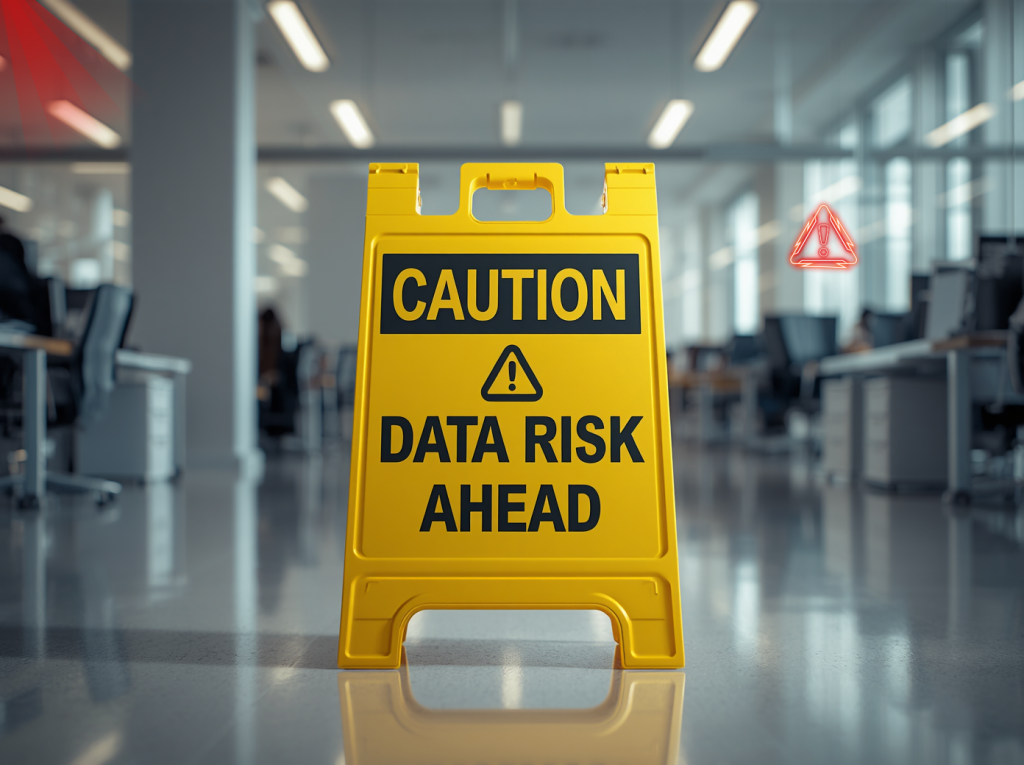
Workplace safety now includes protecting your data, systems, and employees from cyber risk.
When most business owners hear the words workplace safety, they think about the physical risks first. Wet floors. Heavy equipment. Fire exits. Protective gear. Security cameras. Locked doors.
Those risks still need attention, but the modern workplace has another layer of safety to manage. Today, keeping your workplace safe also means protecting your people, their data, your systems, and the technology your business relies on every day.
In a recent episode of Stimulus Tech Talk, Stimulus Technologies CEO Nathan Whittacre talks about how workplace safety has expanded in the digital age. The conversation covered employee data protection, payroll scams, AI-generated fraud, deepfakes, smart building systems, and why cybersecurity should be part of everyday business operations.
As Nathan explained in the episode, “I think it’s part of every aspect of the business today is having that safety and protection of data is an essential part of what we do in our general operations of the business.”
Workplace Safety Is No Longer Just Physical
Traditional safety planning often focuses on preventing injuries, securing facilities, and reducing accidents. That is still an important part of running a safe workplace. But many of today’s biggest risks do not start with a broken lock or a slippery floor. They start with an email, a fake request, an outdated camera system, or a piece of employee data that was not properly protected.
A cyberattack can disrupt payroll, expose sensitive information, damage client trust, and stop normal operations. For small and mid-sized businesses, even a short disruption can create real financial and operational strain.
That is why cybersecurity belongs in the workplace safety conversation. It protects the people inside the business, not just the systems behind the scenes.
Employee Data Needs Strong Protection
Most businesses collect more employee information than they realize. Payroll details, Social Security numbers, health insurance information, direct deposit forms, job applications, and background check documents all carry risk if they are stored or shared without the right protections.
Hackers value this information because it can be used for identity theft, financial fraud, and targeted attacks. If employee data is exposed, the damage reaches beyond the business. It affects the people who trusted their employer to handle their personal information responsibly.
One practical step is to review when and why sensitive information is collected. If a Social Security number is not needed at the first stage of the hiring process, do not collect it that early. If sensitive documents are being emailed as PDFs or stored in unsecured folders, that process should be updated.
Employee data should be handled with the same care as customer data, financial records, and company intellectual property.
Payroll Fraud Is a Real Workplace Safety Risk
One of the examples Nathan discussed in the episode was direct deposit fraud. This happens when a scammer pretends to be an employee and sends a request to update banking information. The email may look routine. It may even use the employee’s name, tone, or writing style.
If payroll updates the account without verifying the request, the next paycheck can go to the attacker instead of the employee. That creates an immediate problem for the employee and a serious trust issue for the company.
The solution is a clear verification process. Direct deposit changes, vendor banking updates, ACH requests, and wire transfers should never be approved from email alone. Use a second form of verification, such as a phone call to a known number, manager approval, or a secure employee self-service portal with multi-factor authentication.
This does not need to slow down the business. It simply creates a safer process for requests that carry financial risk.
AI Is Making Scams Harder to Spot
Business owners and employees used to be able to catch many scams by looking for obvious signs. Strange wording, misspelled words, odd formatting, and suspicious links were easier to spot. AI has changed that.
Scammers can now create polished emails, realistic voices, fake websites, and convincing messages in very little time. A request may look like it came from a coworker, vendor, client, or executive. A voicemail may sound familiar. A website may look professional. That does not mean it is real.
Nathan warned about this shift when discussing deepfakes and voice cloning: “AI generated voices, near perfect. And even conversations are near perfect today too.”
This is why businesses need verification steps that do not rely only on how something looks or sounds. Before sending money, changing account details, sharing sensitive information, or granting system access, employees should know exactly how to confirm the request through a trusted channel.
Physical Security Technology Can Create Cyber Risk
Many companies use cameras, key fobs, door access systems, HVAC controls, lighting systems, and other smart building tools to improve workplace safety. These systems can be useful, but they can also become a risk if they are outdated, exposed to the internet, or connected directly to the main business network.
Older camera and access control systems were often installed for convenience. A business owner wanted to check cameras remotely, unlock doors, or manage access from anywhere. Those features can help, but only when the systems are properly secured.
If a hacker gets into an old camera system, they may be able to watch activity in the office, disable cameras, unlock doors, or use the device as a path into other systems. This is where physical safety and cybersecurity overlap.
A good starting point is to review all connected building systems. Make sure firmware is updated, default passwords are changed, remote access is secured, and systems are separated from the primary business network when possible.
Action Steps for Business Owners
Start by reviewing where employee data is stored, who has access to it, and whether sensitive information is encrypted or protected. Pay close attention to payroll files, HR platforms, benefits documents, and job applicant information.
Next, create a written process for payment changes. Any request involving direct deposit, vendor banking information, ACH payments, or wire transfers should require verification through a trusted method. Make sure your team knows they are allowed to pause and confirm before acting.
Add multi-factor authentication to key systems, especially email, payroll, cloud platforms, HR software, vendor portals, and financial tools. Passkeys and biometric authentication can make this easier for employees while improving security.
Review your physical security technology, including cameras, access controls, alarm systems, smart lighting, and HVAC controls. These tools should be updated, monitored, and configured so they do not create unnecessary exposure.
Finally, train your team on AI-driven scams. Employees need to understand that a familiar voice, clean email, professional website, or realistic message can still be fake. The goal is not to make employees suspicious of everything. The goal is to give them a clear process so they know what to do when something feels unusual.
Cybersecurity Belongs in Daily Operations
Cybersecurity should not sit off to the side as an IT-only concern. It affects hiring, payroll, vendor management, building access, client service, employee trust, and business continuity.
The safest businesses are usually the ones that build security into normal operations. They do not wait for a crisis. They set expectations, document processes, train their teams, and review their systems before a problem turns into an emergency.
That is the main takeaway from this episode of Stimulus Tech Talk. Workplace safety has expanded. Business owners now need to think about both physical protection and digital protection when they look at risk.
Watch the Full Episode
In the full episode, Nathan talks through the real-world risks business owners should be thinking about, including employee data, direct deposit scams, AI-generated fraud, deepfakes, access control systems, and cybersecurity assessments.
Watch the full episode here or listen on your favorite podcast app including Spotify, Amazon Music, and Apple Podcasts.
Book a Cybersecurity Assessment
Not sure where your business stands? Stimulus Technologies offers a free cybersecurity assessment to help you identify risks, review your systems, and understand what steps make sense for your company.
Book discovery call today to schedule your cybersecurity assessment and get a second set of eyes on your IT and security environment.